Updated November 10, 2026
What can I write in a thank-you note without sounding formal?
Name what the person did, then say what it meant to you. “Thank you for bringing dinner on Tuesday. Having one less thing to work out that evening was such a help.” That is enough to start. You do not need a grand opening or a page of perfect sentences.
When I’m stuck on a note, I start with the detail I would mention if we were talking across the table. The ride home. The extra place at dinner. The message that arrived when the week was getting complicated. A specific memory gives you something real to write about.
Start with what happened
Try this simple pattern: Thank you for [what they did]. It helped me [what changed or why it mattered]. Close in the way you normally would with that person.
If “I’m deeply grateful” is not how you talk, leave it out. “That helped more than you know” or “I loved spending the evening with you” may sound more like you. Choose the words that fit what actually happened.
Three thank-you note examples you can make your own
These are sample messages, not customer stories or quotations.
For everyday help
“Thank you for picking up the kids on Tuesday. Knowing they had a ride gave me time to finish my appointment without rushing. I really appreciated it.”
For someone who checked in
“Your message last week meant a lot. Thank you for remembering what I had going on and making time to ask. I’m glad I could talk it through with you.”
For a dinner host
“Thank you for having us over on Saturday. I loved getting to sit around the table and catch up. It was such a lovely way to spend the evening.”
Keep the structure, then swap in your own detail. You do not need to copy a whole example for the note to work.
Choose a gesture that fits the relationship
A note can be the whole thank-you. You can also return a favor, make time for a visit or tell someone exactly what you appreciated in person. A gift is optional, and it does not need to match the size of the favor.
As fall visits turn into holiday gatherings, keep the person in mind before choosing the gesture. A host may appreciate a message about the evening you shared. Someone who enjoys writing letters may enjoy stationery for their own future notes.
Should I use flat or folded notecards?
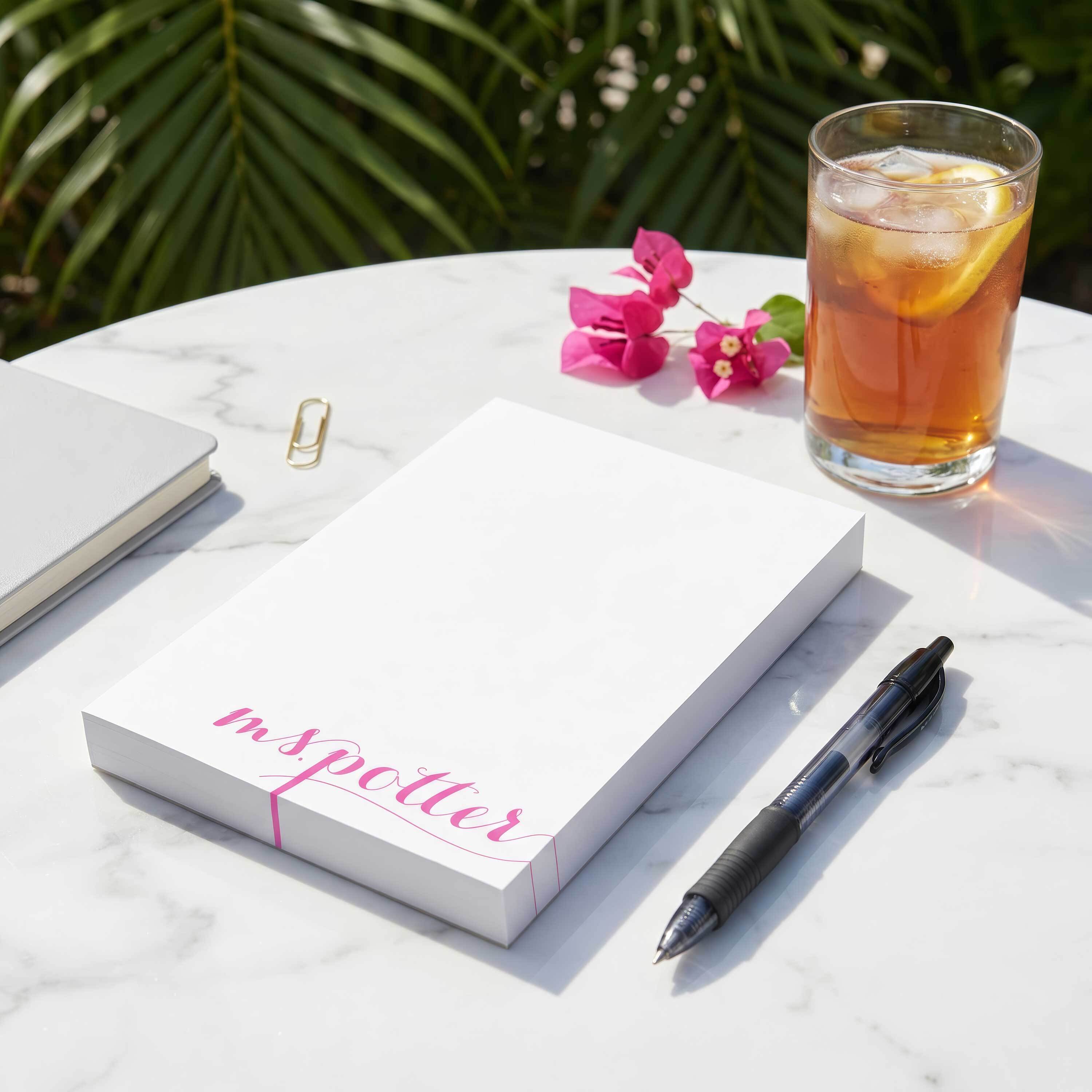
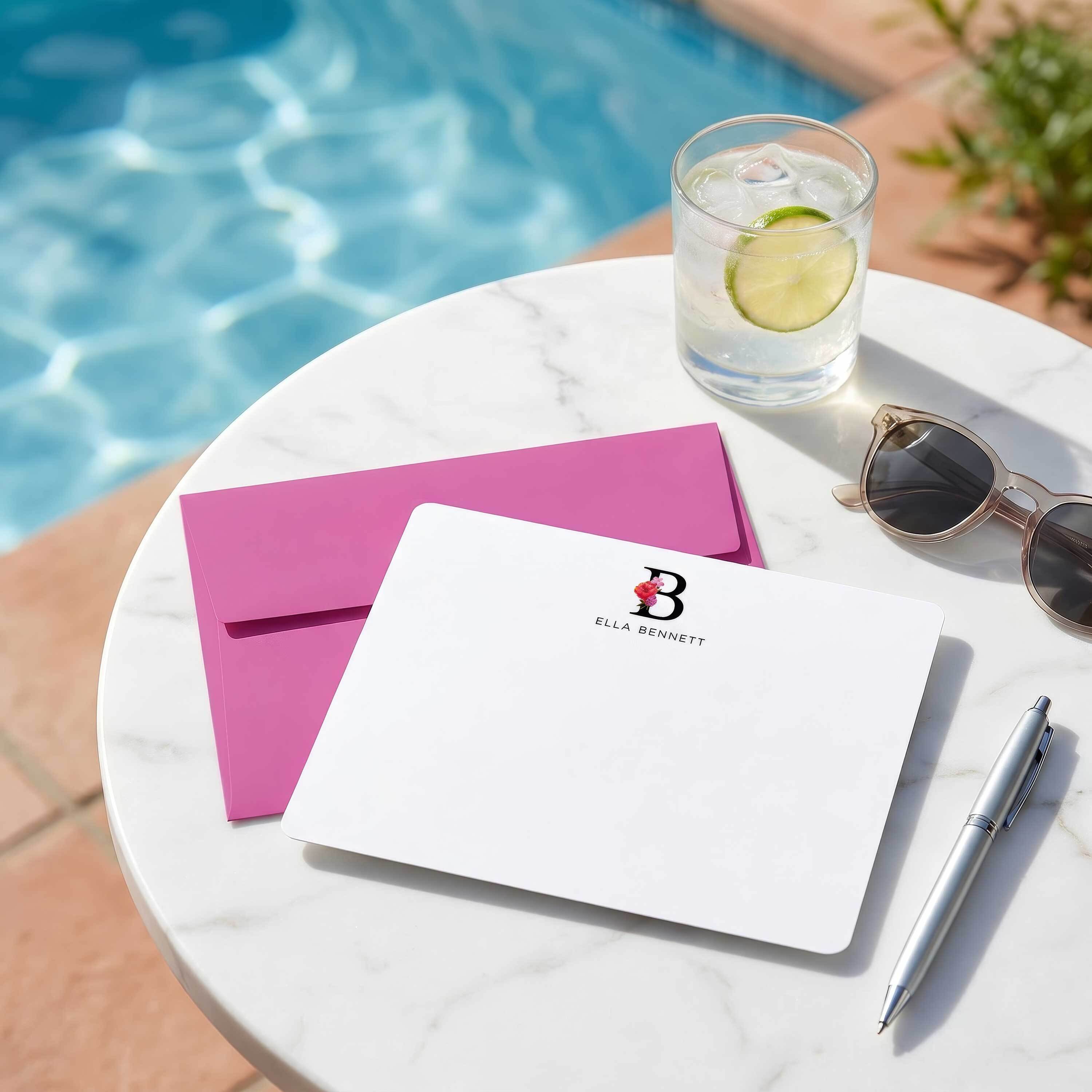
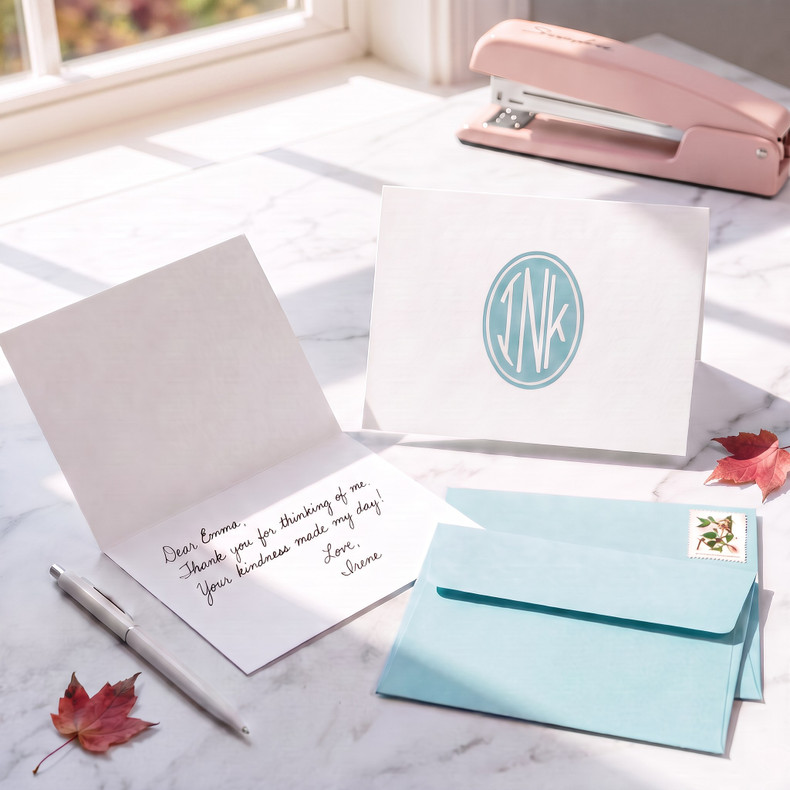
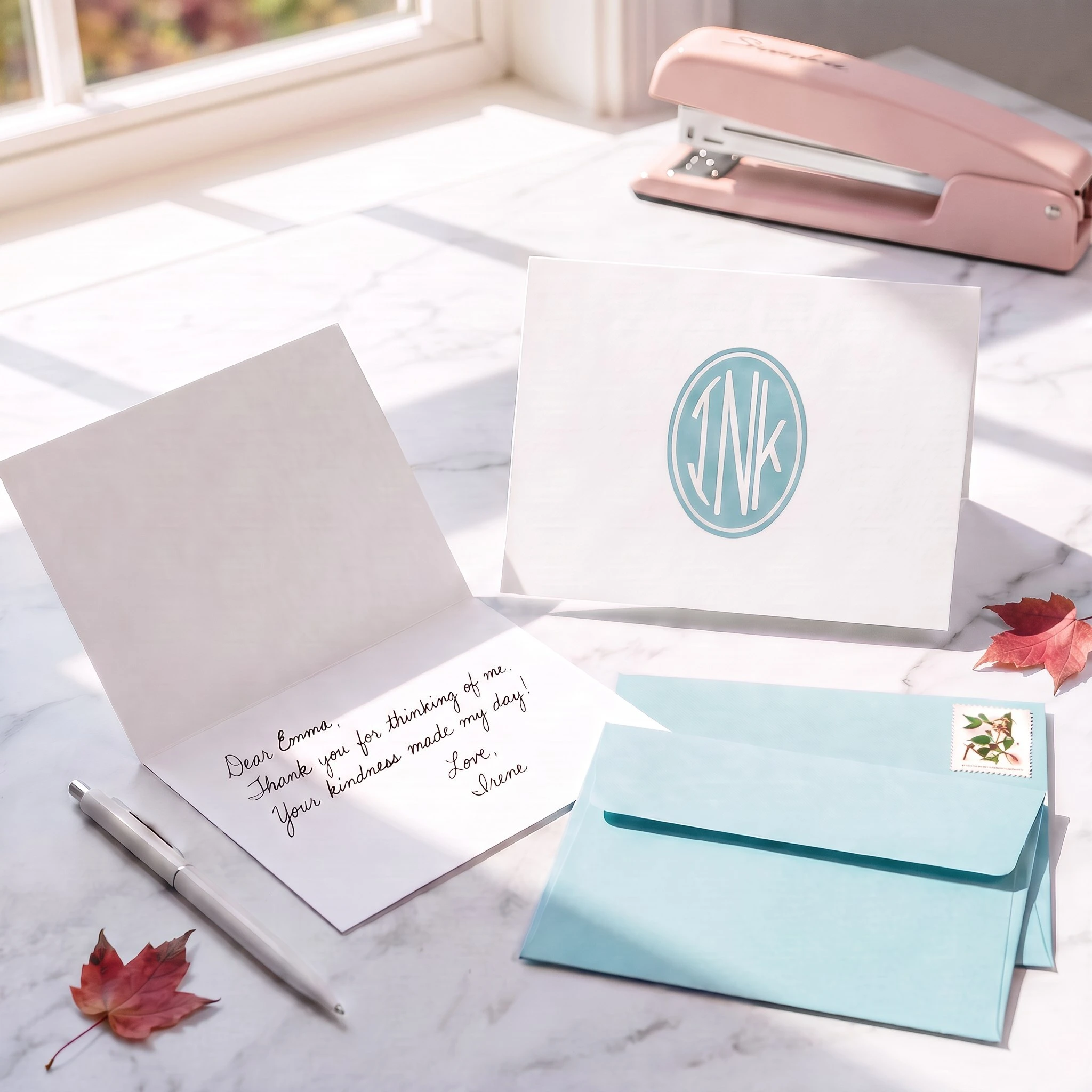
For a short message, my Simple Calligraphy flat notecards give you a single card to write on, with a printed name and rounded corners. Circle Monogram folded notecards open to a blank interior when you want more room to catch up. Both are A2, 4.25 × 5.5 inches (10.8 × 14 cm), and include coordinating envelopes.
When stationery makes sense as a holiday gift
Think about what the person already likes to do. Do they mail birthday cards, write to family or keep a few cards in a desk drawer? A set of personal stationery gives them paper for those habits. It is a gift for the notes they want to send, not an assignment to write more.
You can tuck in your own note explaining the choice: “I thought of the letters you send, and wanted you to have something for your next one.”
Personalized gifts need time to be made and shipped. Check the current production information on the product page before ordering, then allow additional time for transit. If you request a proof, leave time to review and approve it too.
Do I need special stationery to say thank you?
No. Use a card or paper you already have if that helps you send the message today. The specific thing you noticed is the part only you can add.
When should I send the note?
Write while the detail is fresh if you can. If time has passed, start with the thank-you rather than a long apology. For occasion-specific guidance, read my thank-you note timing guide.
A small place to begin
Think of one person and one thing they did. Write that first sentence. You can decide what comes next after that.
From my desk to yours,
Jess